
CAP Laboratory Accreditation
Your path to excellence starts here. Partner with a world-leading provider of medical laboratory accreditation — setting the benchmark for quality, from routine panels to the most complex testing.

What laboratory accreditation means
Laboratory accreditation is a process in which an independent body certifies that a laboratory meets defined quality standards. It ensures that a lab’s methods, equipment and personnel deliver accurate and reliable results.
The CAP has shaped these standards since the 1960s — developing checklists and creating an accreditation program with inspections that still form the foundation for outstanding patient care today.

Proficiency testing (PT)/EQA requirement before accreditation
To demonstrate their readiness and commitment to a comprehensive quality program, laboratories outside the US and Canada must participate in a CAP Proficiency Testing / External Quality Assessment (PT/EQA) program for at least 6 months before they become eligible for CAP accreditation.
6-month minimum
Continuous proficiency testing (PT)/EQA participation before eligibility.
Recognized in 60 countries
An internationally respected accreditation standard.
21 checklists
Discipline-specific requirements guide every inspection.
2-year cycle
Re-accreditation keeps quality standards current.
Why choose CAP accreditation?
A globally recognized gold standard
Standardized, internationally respected requirements set your laboratory apart and open new national and international growth opportunities.
Exclusive focus on laboratory medicine
Since 1946 the CAP has focused solely on pathology and laboratory medicine — covering pre-analytical, analytical and post-analytical stages of the whole lab.
Annually updated checklists
Checklists are reviewed every year with input from 25+ scientific committees to reflect the latest techniques, standards and best practices.
Peer-based, practice-driven inspections
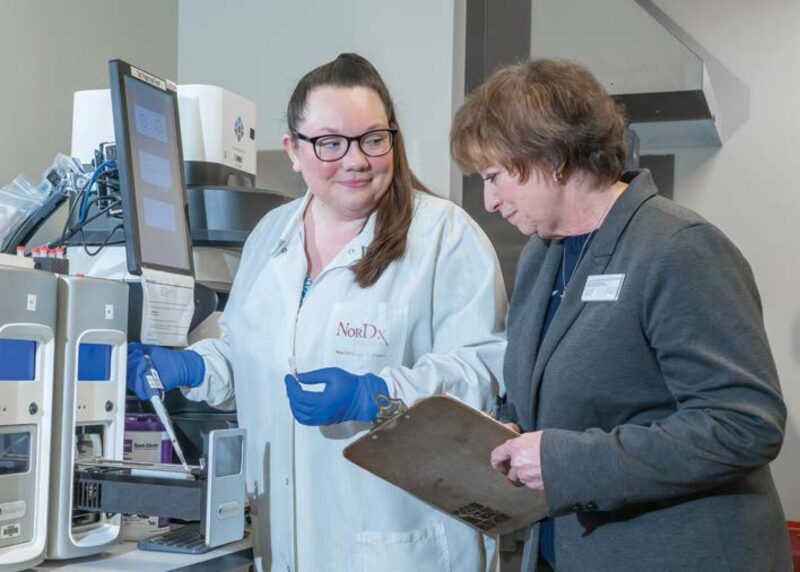
Trained, practicing laboratory professionals inspect your lab using checklists tailored to your specific test menu — a relevant, educational review.
The CAP peer-inspection approach
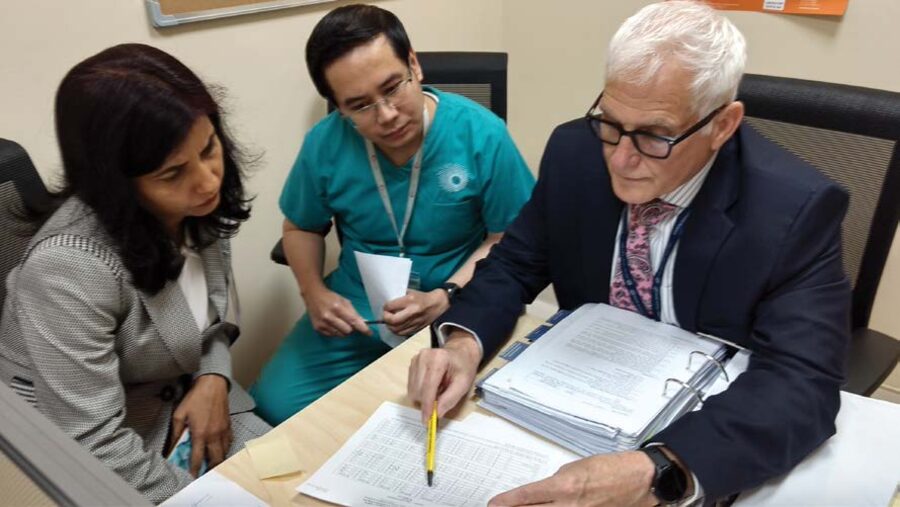
What makes a CAP inspection different: it is carried out by fellow laboratory professionals, tailored to your disciplines and grounded in everyday practice.

A collaborative approach
Inspections are a peer-to-peer exchange between laboratory professionals — a constructive dialogue, not a one-way audit.
Discipline-specific expertise
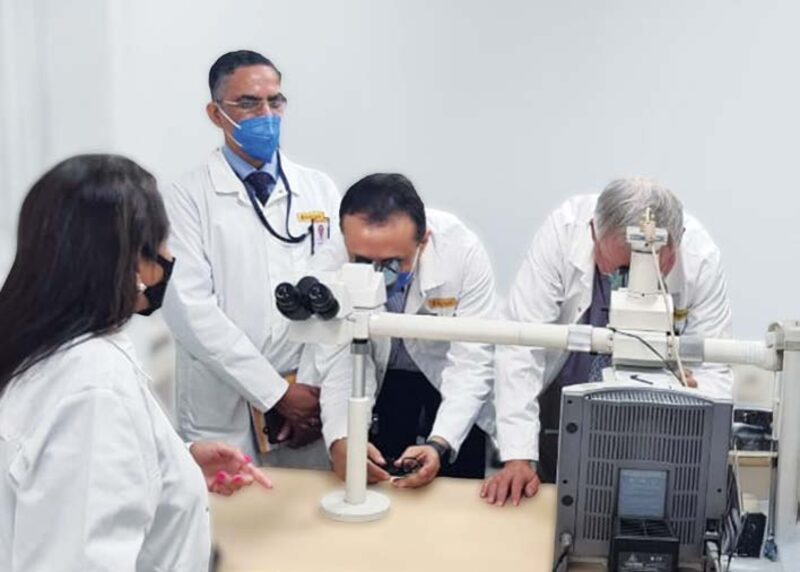
Inspectors are practising specialists in your field, so requirements are assessed by people who understand your day-to-day work.

Hands-on, practice-driven
The review is grounded in real laboratory practice — examining how methods, equipment and staff actually perform at the bench.

A thorough, structured inspection
Discipline-specific checklists guide a complete, documented review across the pre-analytical, analytical and post-analytical phases.
What CAP accreditation delivers for your laboratory
CAP accreditation is more than a certificate on the wall. It is a strategic investment that raises quality, builds trust and opens concrete business opportunities. Here is what your laboratory gains.
Prove your quality — beyond doubt
Accreditation turns "we are good" into independently verified proof. Standardized, documented processes reduce errors and give clinicians, patients and partners hard evidence they can trust.
Unlock new markets
CAP is recognized in 60 countries and is the reference standard for US and international healthcare. Accreditation opens doors to referrals, cross-border business and tenders that require a globally accepted mark of quality.
Become clinical-trial eligible
Pharmaceutical sponsors and CROs require laboratories with internationally accepted quality systems. CAP accreditation makes your lab eligible for lucrative clinical-trial and central-lab work.
Win on quality, not only on price
A CAP mark differentiates you from competitors and lets you compete on excellence. It is a decisive argument in negotiations, tenders and partnership discussions.
Build a culture of continuous improvement
Annually updated checklists and recurring peer inspections keep your team learning, aligned to best practice and improving year after year — not just compliant once.
Grow revenue and reputation
Higher trust attracts higher-value work: complex testing, long-term contracts and premium partners. Quality becomes a growth engine, not just a cost.
Turn CAP accreditation into a clinical-trial business
Clinical trials demand the highest, internationally recognized quality standards. CAP accreditation positions your laboratory as a trusted, high-end partner for pharmaceutical sponsors and contract research organizations (CROs) — and opens a high-value, recurring revenue stream alongside your routine diagnostics.
Partner with top pharmaceutical manufacturers
Global pharma companies and CROs place central-lab and biomarker work only with laboratories they can trust. A CAP mark puts your lab on their shortlist.
Position as a high-end laboratory
CAP accreditation signals the top tier of laboratory medicine — instantly elevating how sponsors, regulators and referring labs perceive your organization.
Meet data-integrity and regulatory expectations
CAP requirements align with the rigorous documentation, traceability and quality-control standards that clinical-trial and regulatory work (including GCP/GCLP and FDA-driven studies) demand.
Extend and diversify your business
Clinical-trial testing adds a high-value, recurring revenue stream alongside routine diagnostics — reducing dependence on any single market and smoothing demand.
The accreditation process
Technical evaluation
Review of the laboratory’s quality management system and documentation.
On-site assessment
An on-site inspection verifies the quality and competence of methods, equipment and personnel.
Regular audits
Recurring audits ensure continued compliance and ongoing improvement throughout the accreditation cycle.
Discipline-specific checklists
CAP checklists cover the entire laboratory spectrum — from management to the bench — forming a common basis across teams. They are full of proven practices and drive learning and quality improvement.
Frequently asked questions
The most common questions laboratories ask before starting their CAP accreditation journey.
Who can apply for CAP accreditation?
Any medical or clinical laboratory — hospital-based, independent/reference, physician office, academic, public health, veterinary or clinical-trial laboratories — can pursue CAP accreditation, regardless of size or country.
Do we need proficiency testing (PT) before accreditation?
Yes. Laboratories outside the US and Canada must participate in a CAP Proficiency Testing (PT) / External Quality Assessment (EQA) program for at least 6 months before they become eligible for CAP accreditation. It demonstrates readiness and a genuine commitment to quality.
What does a CAP inspection actually involve?
A peer inspection carried out by practising laboratory professionals, using discipline-specific checklists tailored to your exact test menu. It reviews the pre-analytical, analytical and post-analytical phases — how your methods, equipment and staff really perform at the bench. It is a constructive, educational review, not a one-way audit.
How long does it take to become accredited?
Timelines vary with the size of the lab and how mature your quality management system already is. Together with the mandatory 6-month proficiency testing (PT) period, most laboratories plan for several months of preparation. Our readiness assessment helps you see exactly where you stand and what is still needed.
How is accreditation maintained over time?
CAP accreditation runs on a recurring cycle. After the initial on-site assessment, regular audits and re-inspections ensure continued compliance and ongoing improvement — keeping your quality system current with annually updated checklists.
Is CAP accreditation recognized internationally?
Yes. CAP is a globally recognized gold standard, accepted in 60 countries and referenced by healthcare systems, regulators and pharmaceutical partners around the world.
How does KombiMED support our laboratory?
As an official CAP distribution partner, KombiMED guides you end to end — from a structured CAP readiness assessment and proficiency testing (PT) enrolment to equipment, consumables and preparation for the inspection — so you reach accreditation with confidence.
Download the CAP brochures
The official CAP International Accreditation brochure (Phase 2), available in German and Russian.

Assess your laboratory’s CAP readiness
Complete the CAP Accreditation Questionnaire and receive a structured readiness summary as a downloadable PDF.
Start the assessment